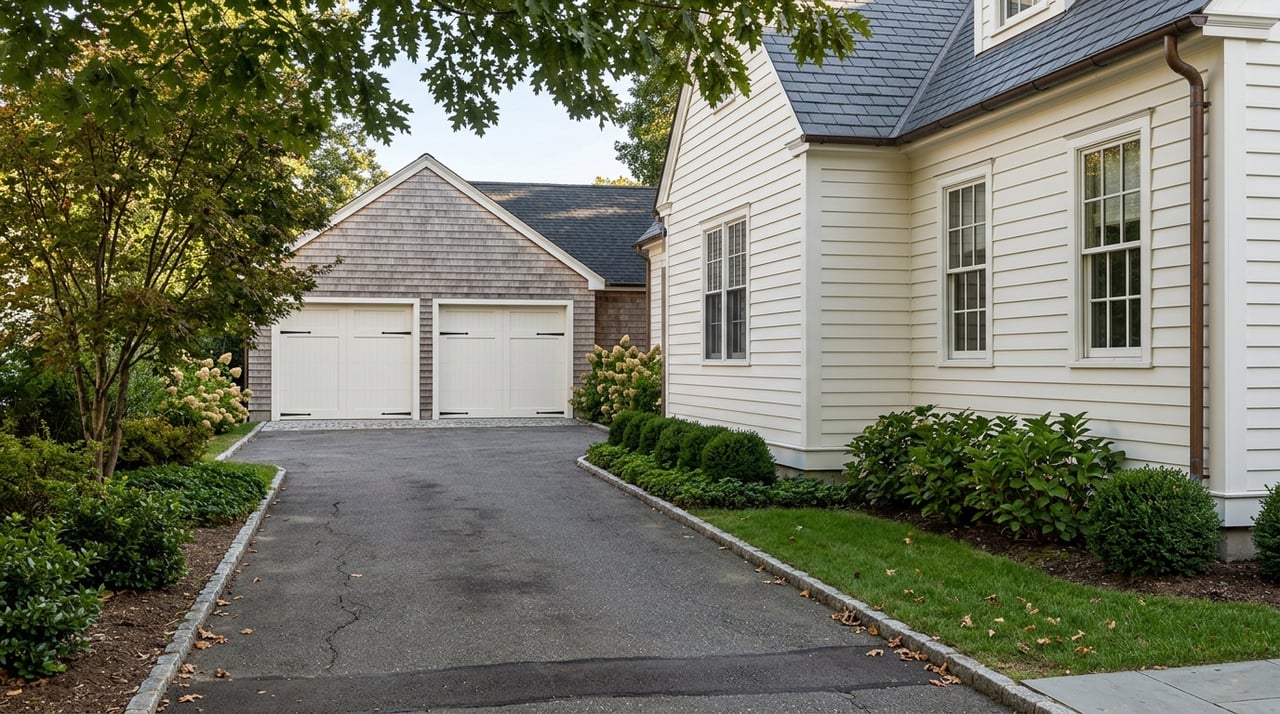
Wondering whether your Newton property has real development upside, or just the appearance of it on paper? In a built-out city where zoning rules, lot shape, frontage, and historic review can matter as much as lot size, it is easy to overestimate what a parcel can actually support. If you are thinking about selling, holding, or repositioning a property, this guide will help you understand the factors that most often drive residential development potential in Newton. Let’s dive in.
Why Newton development value is nuanced
Newton is largely built out, and the city notes that much of its residential zoning framework dates back to the 1950s. That means development value is often shaped less by raw square footage and more by whether a parcel can support a practical, code-compliant building envelope.
For many owners, the key question is not simply, “How big is my lot?” It is whether the zoning district, frontage, setbacks, lot shape, historic status, and approval path line up in a way that makes the property attractive to a builder or investor.
Start with Newton zoning basics
Newton’s residential zoning includes single-residence districts, SR1 through SR3, and multi-residence districts, MR1 through MR4. In selected locations, the Village Center Overlay District, or VCOD, is layered over existing zoning and gives owners the option to use either the underlying zoning or the overlay zoning.
That matters because a parcel in one district may have very different development potential than a similar-sized parcel elsewhere. In Newton, zoning often has a direct effect on what can be built by right and what may require a longer approval process.
SR district rules shape many single-family lots
For single-family detached homes in SR districts, Newton applies different lot-area and setback rules depending on whether a lot was created before or after December 7, 1953. For post-1953 lots, minimum frontage is 140 feet in SR1, 100 feet in SR2, and 80 feet in SR3.
These districts also carry different lot coverage and setback standards. In practical terms, two lots with the same area can have very different outcomes if one has limited frontage or awkward dimensions.
MR districts allow more intensity
Multi-residence districts can support somewhat greater intensity than single-residence districts. Newton’s ordinance shows MR standards with a 12,000-square-foot minimum lot area, 80-foot frontage, 25% maximum lot coverage, and 50% minimum usable open space.
For owners and buyers evaluating redevelopment potential, MR zoning can create a different value story. Still, zoning capacity on paper needs to be tested against the actual shape and constraints of the site.
Lot shape and frontage can change the picture
One of the biggest mistakes sellers make is assuming that lot size alone tells the story. In Newton, lot geometry can have a major effect on whether a parcel is straightforward to build on.
The city uses a build factor to limit irregular lot shape on many recorded lots. For lots on plans recorded after September 16, 1996, the maximum build factor is 30 in SR1, 25 in SR2, 20 in SR3, and 20 in all multi-residence districts, unless a special permit is granted.
Why irregular parcels may be less valuable
An irregular lot may look generous on a map but still perform poorly in a development analysis. If frontage is tight, the lot narrows sharply, or the building area gets squeezed by setbacks, the site may be harder to market to a builder.
In real terms, the most attractive parcels are often the ones with cleaner zoning math and a simpler path to a conforming structure. That can make a big difference in pricing and buyer demand.
FAR is a key screening tool
Floor Area Ratio, or FAR, is one of the most important filters in Newton. The city defines FAR as gross floor area divided by lot size and uses it to regulate above-ground mass for additions, replacement homes, and new construction.
Newton also states that existing unfinished basements or attics may be finished without regard to FAR. In some cases, lots created before 1954 may receive a 0.02 FAR bonus if they meet the applicable setback and nonconformity rules.
What FAR means for sellers
If you are evaluating potential value, FAR helps answer a simple question: how much above-ground building area may realistically fit on the site? A parcel with strong lot area but tight FAR constraints may not support the scale a buyer expects.
This is one reason site-specific analysis matters so much in Newton. The value of a development parcel usually comes from what can actually be built, not from broad assumptions about land size.
Newton’s façade rule now matters too
Newton adopted a residential façade rule that becomes effective March 1, 2026. For single-family detached and two-family detached buildings, the front elevation is limited to 60% of lot frontage.
There are important exemptions. Lots with 50 feet or less of frontage are exempt, and portions of buildings that are no more than 1.5 stories and below certain height limits may also be exempt.
Street-facing massing affects design feasibility
This rule matters because development value is tied not only to floor area, but also to how a building can be massed and presented on the street. A parcel may technically support a certain amount of area while still facing practical design constraints at the front elevation.
For sellers, that means builders will often look beyond simple zoning labels. They will want to know whether the parcel can support a workable design without needing added approvals.
Historic review can be a major constraint
Historic review is another major factor in Newton. Any property more than 50 years old is subject to Historic Review for exterior alterations, and partial or total demolition of such a building requires review by the Newton Historical Commission.
Properties in the local historic districts of Auburndale, Chestnut Hill, Newtonville, and Newton Upper Falls are subject to the relevant Historic District Commission for exterior alterations and site changes, including items like driveways, walkways, and other hardscaping.
Historic status can affect timing and certainty
If a parcel is historic or located in a local historic district, the approval path may be more layered. That does not automatically eliminate redevelopment potential, but it can affect timeline, design flexibility, and buyer appetite.
Newton also recommends checking the Assessor’s map, the historic-district layer, and MACRIS before assuming a parcel is redevelopment-friendly. Local landmarks, preservation restrictions, and National Register properties may trigger added review as well.
Historic features may also create opportunity
Historic constraints are not always purely negative. Newton’s ADU rules specifically recognize historic carriage houses and other historic accessory buildings as possible locations for a detached accessory dwelling unit, if they are deemed historically significant and exterior changes preserve historic character and integrity.
That creates an interesting niche for certain properties. In the right case, a historic accessory structure may support added utility and value rather than acting only as a limitation.
ADUs can add meaningful value
Accessory dwelling units are one of the clearest incremental opportunities on many Newton parcels. The city states that a single-family or two-family home may add one ADU regardless of zoning district.
Detached ADUs may be allowed by right up to 1,000 square feet or 50% of the principal dwelling’s floor area. In some cases, 1,200-square-foot by-right options may apply, while larger units may require a special permit.
When ADUs improve marketability
For some sellers, the highest and best use of a property may not be a major redevelopment play. It may be a more targeted value-add story centered on an ADU opportunity, especially where the lot and existing improvements support it cleanly.
That can expand the potential buyer pool to include owners looking for flexible living space as well as buyers focused on long-term property utility. In Newton, this can be a meaningful part of the development conversation.
VCOD parcels may draw added interest
The Village Center Overlay District can make certain Newton parcels especially notable. The city describes VCOD as a by-right option in selected areas near transit, amenities, and gathering spaces, while still allowing owners to use the underlying zoning if they prefer.
For builders and investors, that optionality can be attractive. A parcel in or near a village center may offer a more compelling redevelopment story than a similar parcel elsewhere, depending on the site and applicable standards.
Approval path matters as much as zoning
Newton now routes planning and zoning-related applications through NewGov, and the city’s development review structure includes processes for special permits, variances, 40B applications, historic-district review, demolition review, and building permits. From a marketability standpoint, this matters because a clean by-right path is usually easier to underwrite than a project that depends on several discretionary approvals.
For many development-minded buyers, certainty has value. A parcel that can move forward with fewer layers of review may command more attention than one with a more complicated path, even if both appear similar at first glance.
Inclusionary zoning should be screened early
For larger redevelopment sites, inclusionary zoning can also affect value. Newton’s ordinance bases required affordable units on the total number of new units proposed on the site or on contiguous parcels.
That means larger projects need early analysis, not just conceptual enthusiasm. If affordability obligations apply, they can directly affect a developer’s planning and pricing.
What strong Newton development parcels share
In Newton, the strongest residential development candidates usually share a few core traits:
- Clear zoning framework
- Adequate frontage and lot area
- Manageable lot shape and build factor
- FAR that supports a practical building program
- Limited historic friction
- A permit path that does not rely on multiple discretionary approvals
- Potential ADU or village-center upside where applicable
If one or more of these factors is weak, the parcel may still have value. It just needs to be priced and marketed with more precision.
Why site-specific pricing matters
In Newton, development value usually needs to be based on a property-specific build-out analysis. Older parcels, irregularly shaped lots, historic properties, and sites in or near the Village Center Overlay District often require a closer look before setting expectations.
That is especially important if you are selling a high-value home or land parcel where the buyer may be weighing personal use, renovation, ADU potential, or redevelopment. The right strategy is not only about identifying upside, but also about presenting the opportunity with clarity and credibility.
For premium properties in Newton, that is where experienced local positioning matters. A thoughtful evaluation of zoning, lot characteristics, historic context, and buyer audience can help you avoid underpricing real potential or overstating what the site can support.
If you are considering the sale of a Newton property with possible development value, working with a local expert can help you frame the opportunity correctly, prepare the asset for market, and reach the most relevant buyers with discretion. To start that conversation, Robin Allen offers private, strategic guidance tailored to high-value homes and residential parcels.
FAQs
How do you evaluate residential development potential in Newton?
- Start with zoning district, frontage, setbacks, lot shape, build factor, FAR, historic status, and the likely permit path. In Newton, development potential is usually a site-specific analysis rather than a simple land-size calculation.
What zoning districts matter for Newton residential development?
- Newton uses single-residence districts SR1 through SR3, multi-residence districts MR1 through MR4, and the Village Center Overlay District in selected areas. Each can affect by-right options and redevelopment flexibility differently.
Does lot shape affect development value in Newton?
- Yes. Irregular geometry, narrow frontage, and nonconformities can make a parcel harder to build on, even when total lot area appears sufficient.
How does FAR affect a Newton redevelopment site?
- FAR limits above-ground building mass by comparing gross floor area to lot size. It is a major screening tool for additions, replacement homes, and new construction in Newton.
Can historic review limit redevelopment in Newton?
- Yes. Properties more than 50 years old are subject to Historic Review for exterior alterations, and demolition review may apply. Local historic districts and certain preservation designations can add further review requirements.
Are ADUs allowed on Newton residential properties?
- Yes. Newton states that a single-family or two-family home may add one ADU regardless of zoning district, with by-right detached ADUs allowed in certain size ranges.
What makes a Newton parcel attractive to builders?
- Builders often look for clear zoning math, adequate frontage, workable lot geometry, manageable historic constraints, and a by-right or otherwise predictable approval path.