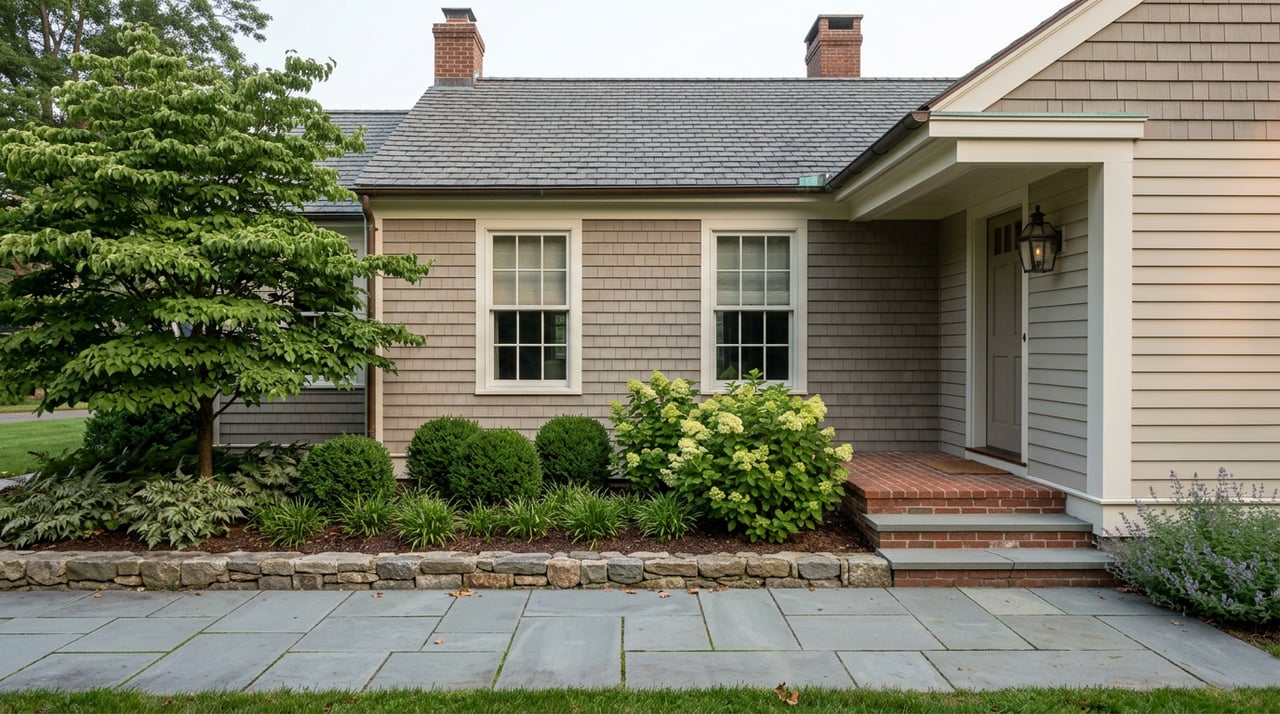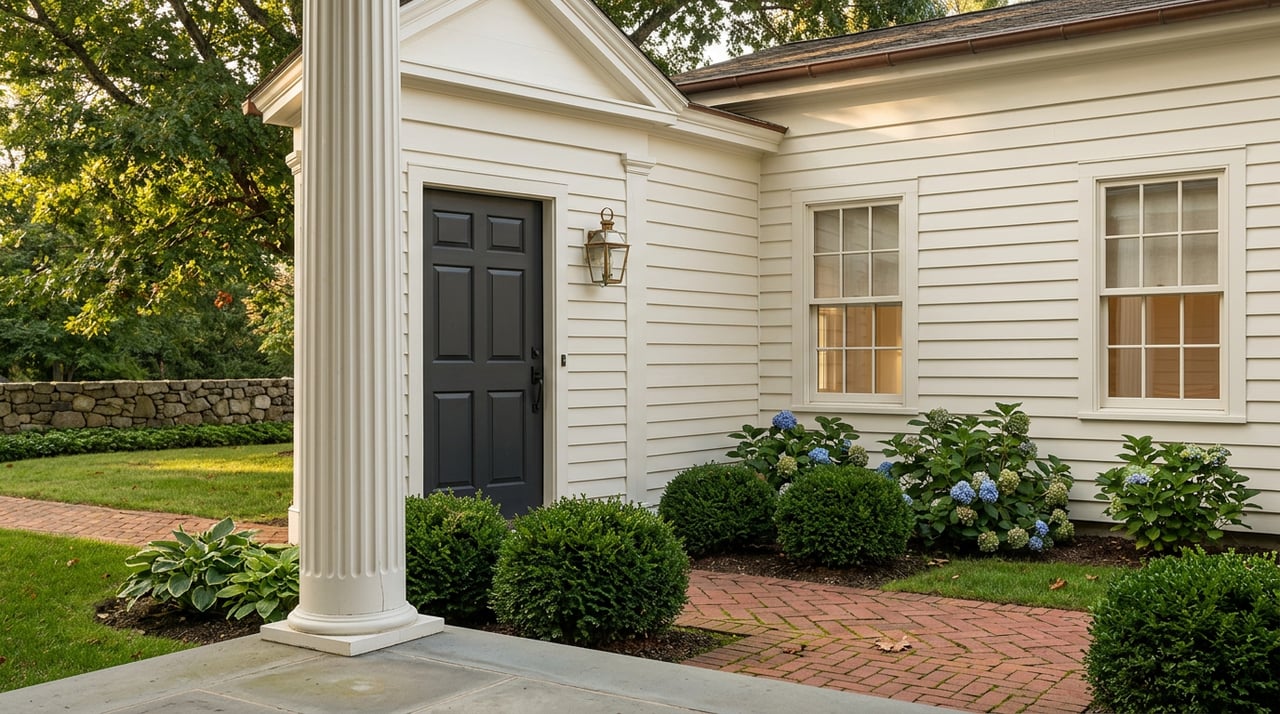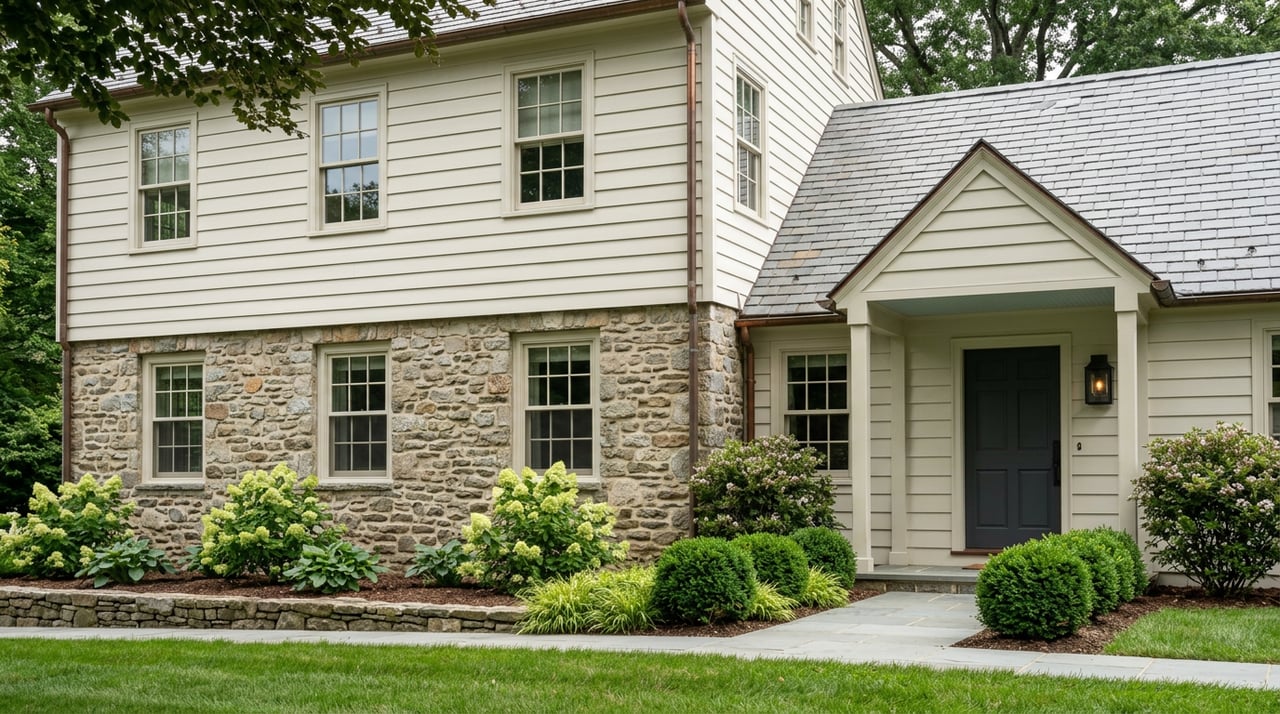
Two houses on the same wooded stretch near Hammond Pond can share a ZIP code, a school of architecture, a landscape architect's fingerprints, and even a cul-de-sac. What they will not share, if the parcel line runs between them, is a tax regime. Chestnut Hill is one of the very few places in Greater Boston where an owner's annual carrying cost is decided less by the house than by which municipal assessor's office holds the file.
That is the mechanism most buyers overlook when they compare listings inside 02467. The headline number on a listing page reflects what the seller is paying today under a specific rate, a specific assessment, and a specific exemption status. Change any one of those and the math changes. In Chestnut Hill, all three change at the town line.
The line you cannot see on the listing
Chestnut Hill is a village, not a municipality. Its borders are drawn by the 02467 ZIP Code, and inside that boundary the parcel you buy sits in one of three jurisdictions: Newton in Middlesex County, Brookline in Norfolk County, or the Brighton and West Roxbury sections of the City of Boston in Suffolk County. The Chestnut Hill Historic District listed on the National Register in 1985 covers roughly seventy acres between Middlesex Road, Reservoir Lane, Crafts Road, and Dunster Road, and it is almost entirely on the Brookline side. The Old Chestnut Hill Historic District, listed a year later along Hammond Street and Chestnut Hill Road, sits inside Newton. The Chestnut Hill Reservoir Historic District belongs to Boston. Same village, three deed offices, three assessors, three tax bills.
For fiscal year 2026 the three regimes look like this:
| Jurisdiction inside 02467 | FY2026 residential rate (per $1,000) | Residential exemption for owner-occupants | Annual savings for a qualifying owner-occupant |
|---|---|---|---|
| Newton | $9.69 | None adopted | $0 |
| Brookline | $10.24 | $354,974 deducted from assessed value | $3,634.93 |
| Boston (Brighton and West Roxbury sections) | Boston classified rate | Value-based deduction under Boston's program | Up to $4,353.74 |
Newton's rate is confirmed by the City of Newton Assessing Department at $9.69, down from $9.80 in FY2025. Brookline's $10.24 residential rate and $354,974 exemption are published on the Town of Brookline's Residential Exemptions and Property Tax Rates & Definitions pages. Boston's exemption savings figure of $4,353.74 for FY2026 was posted to the city's assessing materials for the current cycle.
The important line is the second column. Newton has not adopted the broad owner-occupant exemption permitted under Massachusetts General Laws Chapter 59, Section 5C. Brookline and Boston have. That single policy choice, more than any rate difference, is what separates the three sides of 02467.
What the exemption actually pays for
Consider a Chestnut Hill single-family assessed at $2,500,000, a plausible figure inside the current $2.5M–$3.5M single-family band that shows up in Q1 and Q2 2026 market reporting for the village.
On the Newton side, the arithmetic is direct. Assessed value divided by 1,000, multiplied by $9.69, is $24,225 a year. There is no owner-occupant deduction that can be layered on top. Newton administers targeted programs for seniors under Clause 41C, a Clause 41A senior deferral, and relief for veterans, blind residents, and hardship cases, all with FY2026 applications due April 1, 2026, but none of those substitute for the broad residential exemption that its neighbors run.
On the Brookline side, the same $2.5M assessment produces a gross bill of $25,600. An owner who occupies the home as a principal residence as of January 1 and files by the April 1 deadline has $354,974 stripped from the taxable value before the rate is applied. That is worth $3,634.93 in relief, dropping the effective bill to roughly $21,965. Despite the higher headline rate, the qualifying owner-occupant on the Brookline side pays about $2,260 less per year than an equivalent buyer across the town line in Newton. The relief compounds year after year, and Brookline grants it on a continuing basis once approved.
The direction of the arithmetic reverses for the buyer who cannot claim the exemption. An investor, a landlord, a second-home owner, or a trust arrangement that fails Brookline's occupancy test pays the full $25,600 with no deduction. On that side of the line, the higher rate simply sits.
There is a second dimension to the exemption worth naming. Because the deduction is a fixed dollar amount rather than a percentage, it does more work on smaller assessments than on larger ones. On a Chestnut Hill condo assessed near $700,000, the Brookline exemption can wipe out the majority of the annual bill. On a $3M single-family, the same $3,635 in relief is a rounding line, meaningful but not decisive. The exemption is a progressive tool inside a jurisdiction that otherwise taxes at a flat rate.
Why the seller's tax bill is not yours
Even after the buyer picks a side of the line, the number printed on the listing sheet has a short shelf life.
Massachusetts assessments are set as of January 1 of the prior year and reflect sales data from roughly eighteen months earlier. A parcel purchased in the second half of 2026 carries an assessment built out of late-2023, 2024, and early-2025 comparables. Once the transaction closes, the assessment tends to migrate toward the purchase price at the next recertification. If the buyer pays meaningfully above the current assessed value, the following year's bill will not look like the seller's last one.
Proposition 2½ compounds this at the community level. The cap governs the citywide levy, not any individual owner's share of it. When Newton's rate dropped eleven cents from $9.80 to $9.69 for FY2026, many parcel-level bills still went up because assessments rose faster than the rate fell. Brookline's FY2026 median single-family bill rose roughly 6.1%, driven by an $332.5 million levy that includes $28.5 million in debt exclusions voted for capital projects including the new Pierce School. A $23.25 million operating override approved for the fiscal year beginning July 1, 2026 is baked into the trajectory for FY2027 and beyond, per the Town of Brookline's Select Board coverage of the classification hearing.
None of that is a reason to price out of Chestnut Hill. It is a reason to underwrite the forward bill rather than the seller's current one, and to run that math on both sides of the line before deciding which house is actually the better economic proposition.
The moving pieces to name in an offer
A few dated items sit close to the transaction and are easy to miss:
- Brookline residential exemption applications for FY2026 are due April 1. Owner-occupant status must be established as of January 1. Transferring a home into a trust can disqualify a parcel from the exemption without careful drafting.
- Newton abatement applications are due February 1, aligned with the Q3 bill that first reflects the finalized rate and assessment.
- Boston's residential exemption application deadline for FY2026 was April 1, 2026, applied to the Q3 bill issued in late December.
- Since November 1, 2025, Massachusetts sales of $1 million or more where the seller is not a full-year resident are subject to state withholding at closing, a wrinkle that affects out-of-state sellers of Chestnut Hill estates disproportionately.
- The FY2026 residential factor votes in both Newton and Brookline shifted the maximum allowable burden onto commercial property. In practice, Newton's roughly 8% commercial base carries about 13.6% of the levy, per the Newton Beacon's coverage of the November 2025 classification vote. Any softening of that shift in a future year would land primarily on residential owners.
FAQ
If the Brookline rate is higher, why do buyers on that side often pay less? Because the residential exemption is a fixed-dollar deduction from assessed value, not a percentage of the bill. Applied at $10.24 per $1,000, the FY2026 deduction of $354,974 is worth $3,634.93 to a qualifying owner-occupant. That is more than the rate spread between Brookline and Newton on most Chestnut Hill assessments.
Does the exemption help me if I buy the home as an investment or keep it as a second residence? No. Only owners who occupy the parcel as their principal residence as of January 1 qualify in Brookline or Boston. The full assessed value is taxed for landlords, second-home owners, and most trust-held properties that do not meet the occupancy test.
Will my Chestnut Hill assessment change after I close? Usually, yes. Massachusetts assessments trail the market by roughly eighteen months, and the parcel typically migrates toward the purchase price at the next recertification. If the closing price is well above the current assessed value, the buyer should underwrite a higher bill than the one on the listing sheet.
Does the school system change when the town line changes? Yes. Homes in the Newton section are served by Newton Public Schools, the Brookline section by the Brookline Public Schools, and the Boston sections by Boston Public Schools. That distinction sits alongside the tax question when a buyer is choosing between two otherwise similar houses.
Chestnut Hill rewards buyers who read the parcel, not just the address. If you would like a private assessment of a specific 02467 property, including the forward-bill math on both sides of the town line and the exemption path that applies to your ownership structure, Robin Allen welcomes you to request a private consultation.